You can design an accessible bathroom for aging in place by creating a zero-threshold shower, reinforcing the walls to support stylish grab bars, and using available tax credits to reduce the cost of the renovation. The goal is to build a bathroom that feels like a calm, modern spa while quietly supporting long-term independence and safety (to learn more about this, you can visit Statistics Canada).
For Canadian homeowners, the shift toward accessibility is no longer about clinical fixtures. It is about thoughtful Universal Design that blends high-end finishes with features that make daily routines easier at every age.
How Accessible Bathroom Design Works in a Modern Canadian Home
Today’s aging-in-place designs reimagine accessibility as a seamless part of a beautiful space. Instead of bulky hardware or medical-style tubs, the focus is on open layouts, simple transitions, and fixtures that look luxurious while offering essential support.
A curbless shower, floating vanity, and matte finishes are all part of this modern vocabulary. They bring the clean, elevated look of a hotel suite while making the bathroom safer and more intuitive to use (more on accessibility and fall-prevention from CDC Foundation).
Why Accessible Design Matters for Aging in Place
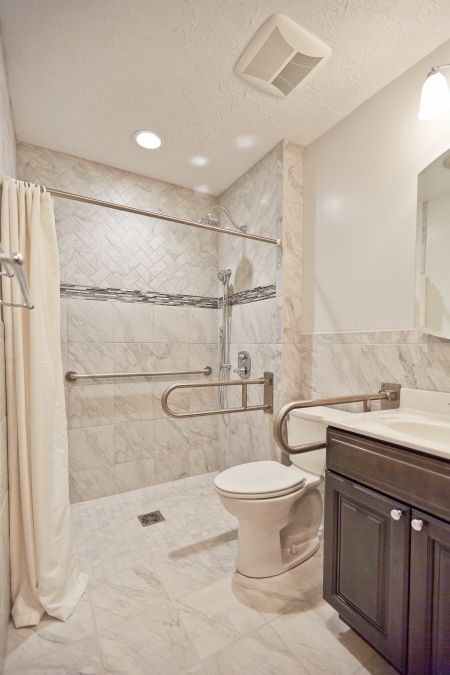
A well-designed accessible bathroom reduces the risk of falls while also offering meaningful financial benefits.
- Staying at home longer: Assisted living in Canada is expensive. A single renovation that supports independence can save years of care costs and allow you to stay in the home you love.
- Resale value: Buyers increasingly look for homes that do not require major updates for mobility. An accessible ensuite is now seen as a smart long-term upgrade rather than a niche feature.
- Tax credits: Federal and provincial programs offer tax relief for accessibility improvements, lowering the net cost of premium fixtures and upgraded layouts.
How Universal Design Compares to a Standard Bathroom Renovation
The difference between a trend-based update and a universal design bathroom is clear in both function and long-term value (for more information, visit Universal Design principles).
| Parameter | Standard “Trend” Renovation | Luxury Universal Design (Recommended) |
| Shower Entry | 4-inch curb (Trip hazard). | Zero-Threshold (Curbless): Seamless, safe, and visually expands the room. |
| Flooring | Polished Marble (Slippery when wet). | Textured Porcelain (R10/R11 rated): High grip, durable, looks like natural stone. |
| Fixtures | Standard knobs and towel bars. | Lever Handles & Rated Grab Bars: Easier for arthritic hands; towel bars reinforced to hold 250lbs. |
| Lighting | Mood lighting (often too dark). | Layered High-CRI LED: Bright, shadow-free lighting prevents accidents. |
Choosing Fixtures That Balance Form and Function
The best accessible fixtures blend into the design rather than calling attention to themselves.
- Toilet: A wall-hung toilet creates an open look, simplifies cleaning, and allows you to set the seat height comfortably during installation.
- Shower system: A thermostatic valve paired with a handheld showerhead on a slide bar supports both standing and seated use while preventing sudden temperature changes.
- Vanity: Deep drawers are easier to access than cabinet doors and bring everyday items within easy reach.
Mistakes to Avoid When Designing an Accessible Bathroom
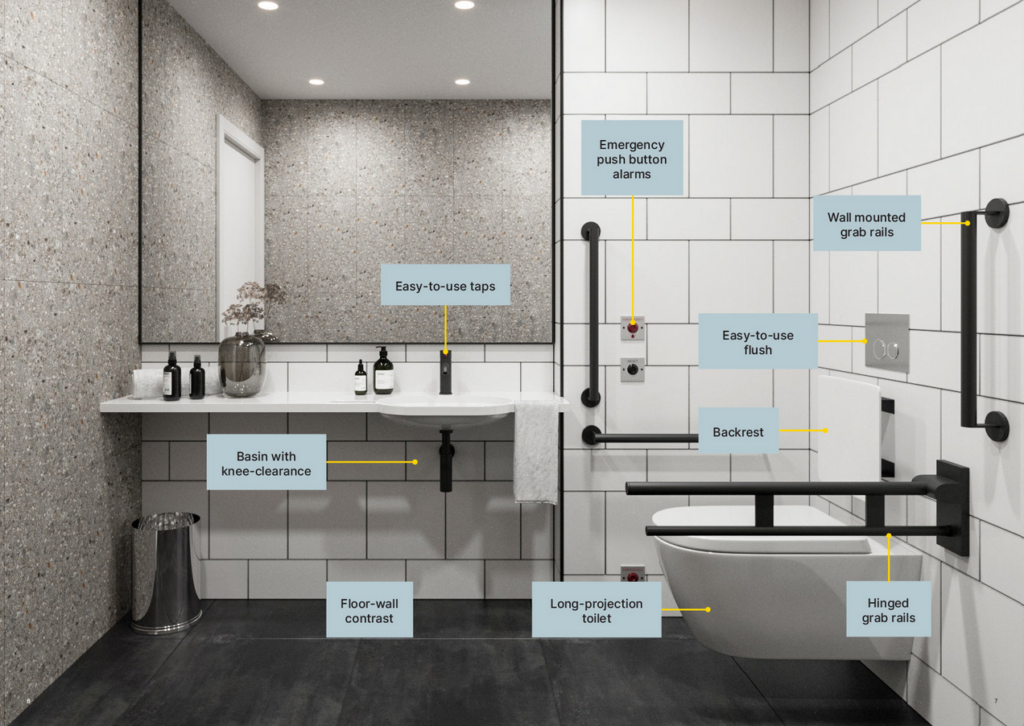
- Relying on suction-cup grab bars: These fail under pressure. Proper blocking inside the wall is essential before installing supportive fixtures.
- Overlooking door swing direction: If a door opens inward, it can trap someone who has fallen. Pocket doors or outward-swinging doors improve safety and emergency access.
- Ignoring visual contrast: As vision changes with age, large areas of similar colors become harder to interpret. Using contrast between flooring, walls, and fixtures improves orientation and ease of movement.
Rethinking the Role of the Bathtub
There is ongoing debate about whether a primary ensuite needs a bathtub. For families with young children, keeping one somewhere in the house makes sense. But in the main ensuite, many homeowners now prefer converting that footprint into a larger walk-in shower.
A generous shower with a built-in bench, hand shower, and warm lighting often feels more luxurious and more practical. Many homeowners echo this preference in real-life discussions, such as this Reddit thread on accessible bathroom upgrades. It also reduces the biggest barrier to safe bathing as mobility changes.
FAQ
1. How can I plan a layout that still feels spacious once accessibility features are added?
Start by mapping out clear movement paths and ensuring there is enough open space for safe turning or assisted mobility. Even small bathrooms can feel open with a curbless shower, floating vanity, and clean sightlines.
2. What features make the biggest difference in everyday comfort as mobility needs change?
Slip-resistant flooring, lever handles, reinforced walls for grab bars, and a thermostatic shower system have the most impact. These features blend into modern design while making daily routines far easier over time.
3. How do I choose finishes that look high-end but still provide real safety benefits?
Look for textured porcelain, matte fixtures, and layered lighting. These materials offer grip, reduce glare, and maintain the calm, spa-like feel that many Canadian homeowners want in a primary ensuite.
4. Is a curbless shower the best long-term choice for aging in place?
For most homes, yes. Curbless showers remove the biggest barrier to safe bathing, make the room feel larger, and work well with benches, hand showers, and future mobility supports. The upfront cost is higher, but the long-term usability is unmatched.
Conclusion
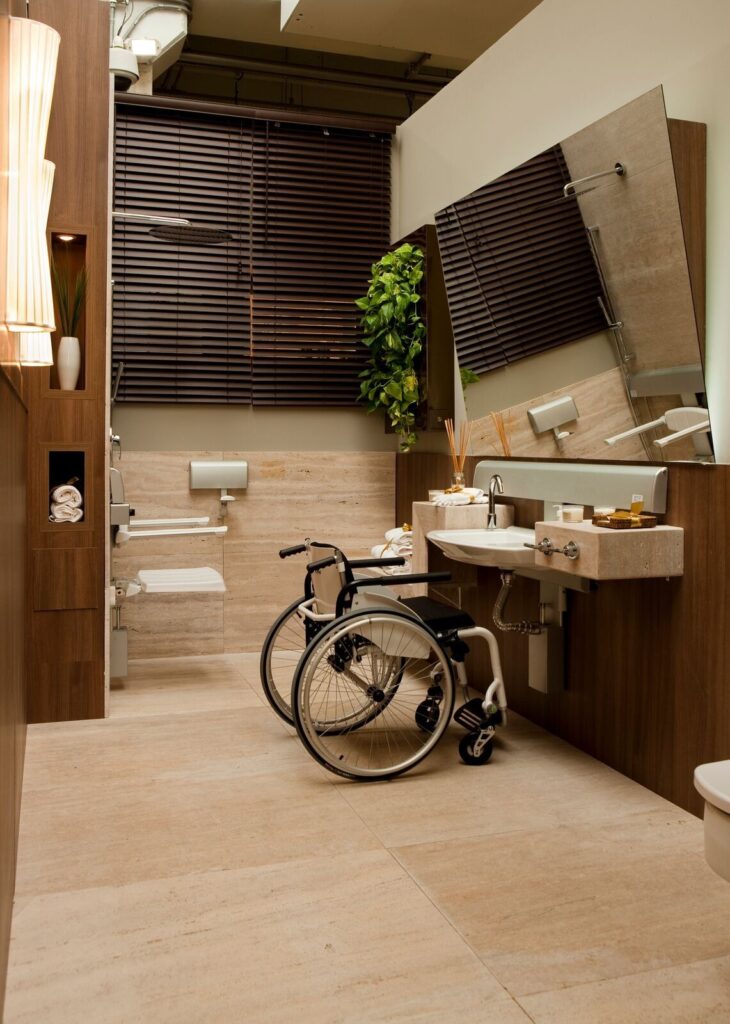
Mastering accessible bathroom design in a Canadian home allows you to create a space that is beautiful, safe, and ready for the decades ahead. When you combine luxurious finishes with thoughtful Universal Design and use the available tax incentives, you build a room that enhances both your daily life and your long-term independence.